
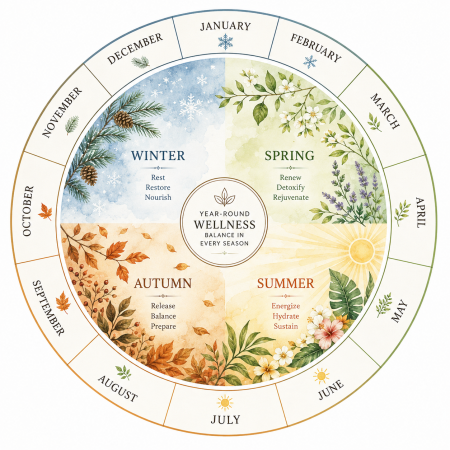
As the seasons change, so do our body’s needs. Variations in temperature, humidity, daylight, and environmental allergens influence our immunity, digestion, sleep, mood, and energy levels. Rather than waiting for illness to occur, a holistic lifestyle focuses on prevention by helping the body naturally adapt to seasonal changes.
Why Does Seasonal Change Affect Our Health?
Scientific research suggests that seasonal transitions can influence:
- Immune function
- Circadian rhythm (sleep-wake cycle)
- Hormonal balance
- Mental health
- Digestive function
- Physical activity levels
During seasonal transitions, people commonly experience:
- Frequent colds and flu
- Allergies
- Digestive disturbances
- Fatigue
- Joint pain
- Mood changes
- Skin dryness
- Sleep disturbances
Supporting the body’s natural adaptation can significantly reduce these seasonal complaints.
Holistic Seasonal Wellness Tips
- Eat Seasonal, Fresh Foods
Nature provides foods that support the body’s needs during each season.
Summer
Monsoon
Winter
Fresh fruits rich in water
Warm homemade meals
Millets
Cucumbers
Ginger
Nuts and seeds
Watermelon
Garlic
Sesame
Coconut water
Turmeric
Soups
Buttermilk
Pepper
Root vegetables
Leafy vegetables
Steamed vegetables
Healthy fats
Research shows that diets rich in fruits, vegetables, antioxidants, and whole foods support immune function and reduce inflammation.
Stay Well Hydrated
Hydration supports:
- Temperature regulation
- Digestion
- Detoxification
- Healthy skin
- Brain function
Drink:
- Water throughout the day
- Herbal infusions
- Lemon water
- Coconut water (summer)
- Warm herbal teas (winter)
Avoid excessive sugary drinks and processed beverages.
- Practice Daily Yoga
Yoga improves both physical and mental resilience during seasonal changes.
Recommended practices include:
- Surya Namaskar
- Asanas
Benefits include:
- Better circulation
- Improved flexibility
- Enhanced lung capacity
- Better immunity
- Reduced stress
Even 20–30 minutes daily can improve overall wellbeing.
- Practice Pranayama for Respiratory Health
Breathing exercises strengthen the respiratory system and promote relaxation.
Useful practices include:
- Anulom Vilom (Alternate Nostril Breathing)
- Bhramari
- Deep Diaphragmatic Breathing
Benefits:
- Better oxygenation
- Reduced stress hormones
- Improved lung function
- Better sleep quality
- Strengthen Immunity Naturally
Natural immunity is built through consistent healthy habits.
Support immunity by:
- Getting adequate sleep
- Eating antioxidant-rich foods
- Managing stress
- Regular exercise
- Sunlight exposure for Vitamin D
- Maintaining gut health
Spices such as turmeric, ginger, cinnamon, and black pepper may help reduce inflammation and support immune function when included as part of a balanced diet.
- Improve Sleep Quality
Seasonal changes often disturb sleep patterns.
Healthy sleep habits include:
- Sleeping at consistent times
- Reducing screen exposure before bedtime
- Evening relaxation or meditation
- Light stretching
- Avoiding heavy meals late at night
Adults generally benefit from 7–9 hours of quality sleep each night.
- Support Mental Well-being
Changes in weather and daylight can influence mood and emotional health.
Daily practices:
- Meditation
- Mindfulness
- Journaling
- Gratitude practice
- Spending time in nature
- Limiting unnecessary stress
These practices may reduce anxiety and improve emotional resilience.
- Stay Physically Active
Regular movement keeps the body adaptable during every season.
Choose activities such as:
- Yoga
- Walking
- Cycling
- Swimming (summer)
- Stretching
- Strength training
Aim for at least 150 minutes of moderate physical activity per week, as recommended by public health guidelines.
- Support Digestive Health
A healthy digestive system is closely linked with immunity.
Simple tips:
- Eat freshly prepared meals
- Include fiber-rich foods
- Eat slowly and mindfully
- Avoid overeating
- Consume fermented foods if tolerated
- Drink adequate water
Many traditional systems also recommend warm meals during colder or rainy seasons to support digestion.
- Spend Time in Nature
Nature itself promotes healing.
Benefits include:
- Reduced stress
- Improved mood
- Better sleep
- Enhanced immune function
- Increased physical activity
Simple activities:
- Morning walks
- Gardening
- Outdoor yoga
Barefoot walking on natural surfaces (where safe and hygienic)
Conclusion
Every season brings unique opportunities to care for your health. Small, consistent lifestyle changes—such as eating seasonal foods, staying active, practicing yoga, managing stress, and prioritizing restful sleep—can help your body adapt naturally and stay resilient throughout the year.
The true wellness begins with living in harmony with nature. Through personalized holistic care, we help you build healthy habits that support physical, mental, and emotional well-being in every season.